
The One-Sentence Rule
The cheapest quote and the best quote are almost never the same number. The exceptions: a simple job like a broken cable or a worn roller really can be inexpensive and done right in one visit, and a quote that's dramatically higher than others isn't automatically better just because it costs more. Price alone tells you very little. What matters is whether the quote spells out exactly what's wrong, what's being replaced, and why.
What a Legitimate Quote Should Include
A quote worth trusting reads like a short explanation, not just a total. Look for these pieces, in writing:
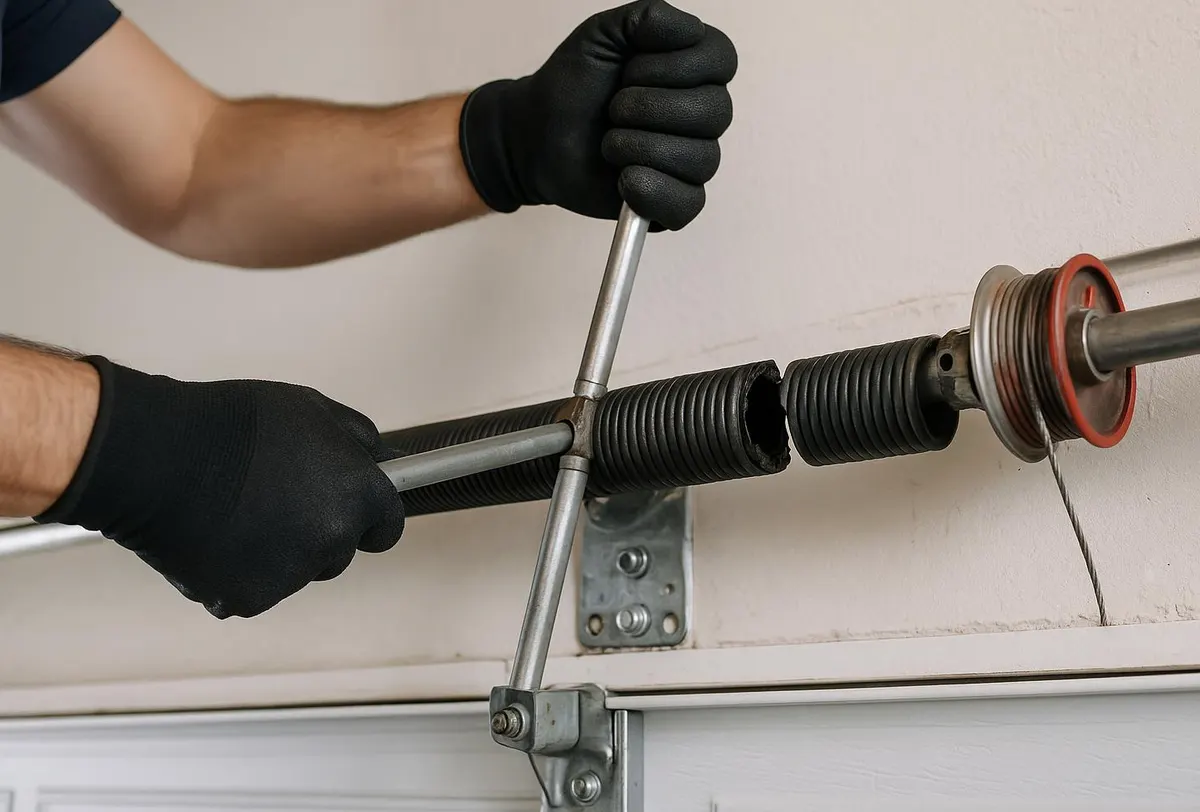
- The specific part or parts failing — not just "spring repair" but which spring, what size, and whether one or both are being replaced.
- Labor and parts broken out separately. This lets you see what you're paying for the diagnosis and installation versus the hardware itself.
- Material specs for anything structural — torsion springs rated for your door's weight and cycle life, galvanized or coated hardware if you're near the water, and tracks or rollers rated for your door's wind-load category if the door itself is being touched.
- A warranty window on both parts and labor, even if it's short. No warranty at all is a signal to ask more questions.
- Whether the quote covers one repair or the whole system. Springs, cables, and rollers wear as a set in humid climates, so a quote that only patches the symptom you called about may leave a related failure for next month.
What to Ignore (Or at Least Not Worry About)
Some line items look alarming but are routine:
- A line for lubrication or a tune-up bundled with a repair. In a climate with salt air and afternoon humidity, this is usually a reasonable add-on rather than padding, since moisture speeds up corrosion on hinges, hinges, and bearing plates.
- A slightly higher quote for stainless or coated hardware near coastal zip codes. Standard galvanized hardware rusts faster within a few miles of the water, so paying a bit more upfront here often saves a repeat service call.
- A diagnostic or trip fee listed separately, as long as it's disclosed before the technician starts work. This is standard practice, not a hidden charge, provided it's mentioned up front.
What you should not brush off: vague language like "additional parts as needed" with no price range attached, or a verbal-only quote with nothing in writing.
Questions to Ask Before You Say Yes
- "What exactly failed, and why?" A technician who can point to the broken part and explain the cause (age, rust, a door that's been off-balance for months) is being straight with you. Vague answers are a reason to pause.
- "Is this a repair or a patch?" Sometimes a quick fix buys you a year, sometimes it buys you three weeks. Ask which one you're getting and get it in writing.
- "Does this part meet wind-load requirements for my door?" If any structural component — panels, tracks, the opener's attachment points — is being replaced, this matters for storm season and for insurance purposes later.
- "What's the cycle life or expected lifespan of the replacement part?" A torsion spring rated for 10,000 cycles behaves very differently than one rated for 30,000, especially with a door used several times a day.
- "Is there a warranty, and what voids it?" Some warranties don't apply if you later have someone else service the door or if you skip basic maintenance.
- "What would happen if I waited on this repair?" A good technician will tell you honestly whether something is urgent (a frayed cable, a spring under visible stress) or something you can schedule for next month.
A Note on Timing and Local Conditions
Quotes that don't account for the local climate are missing something. Humidity causes wood and composite doors to swell and stick seasonally, which can look like a track or opener problem when it's really a clearance issue. Salt air accelerates rust on springs, hinges, and bottom brackets faster than it would further inland. And any quote involving panel or full door replacement should reference wind-load ratings given how exposed this area is during storm season. If a quote doesn't mention any of that when the symptoms suggest it should, ask why.
When to Call Bradenton Garage Door Works
If you've gotten a quote that feels vague, or you want a second opinion before authorizing a repair, that's exactly the kind of call we're set up for. We'll walk through the door with you, point out what's actually failing, and give you a written breakdown before any work starts. For springs, cables, and rollers showing rust or wear from coastal air, our Spring Replacement service uses hardware rated for the loads and climate here, not generic parts. And if the issue turns out to be bigger than a single component — a door that's aging out, an opener that's failing intermittently — our Garage Door Installation team can walk you through what a full replacement would actually cost and why, with no pressure to decide on the spot.
If you're holding a quote you're not sure about, or your garage door needs attention before the next round of storms, call Bradenton Garage Door Works for a straightforward second look — proudly serving Bradenton, Lakewood Ranch, Sarasota, Palmetto, Ellenton, Parrish, Anna Maria, and Holmes Beach, FL.