
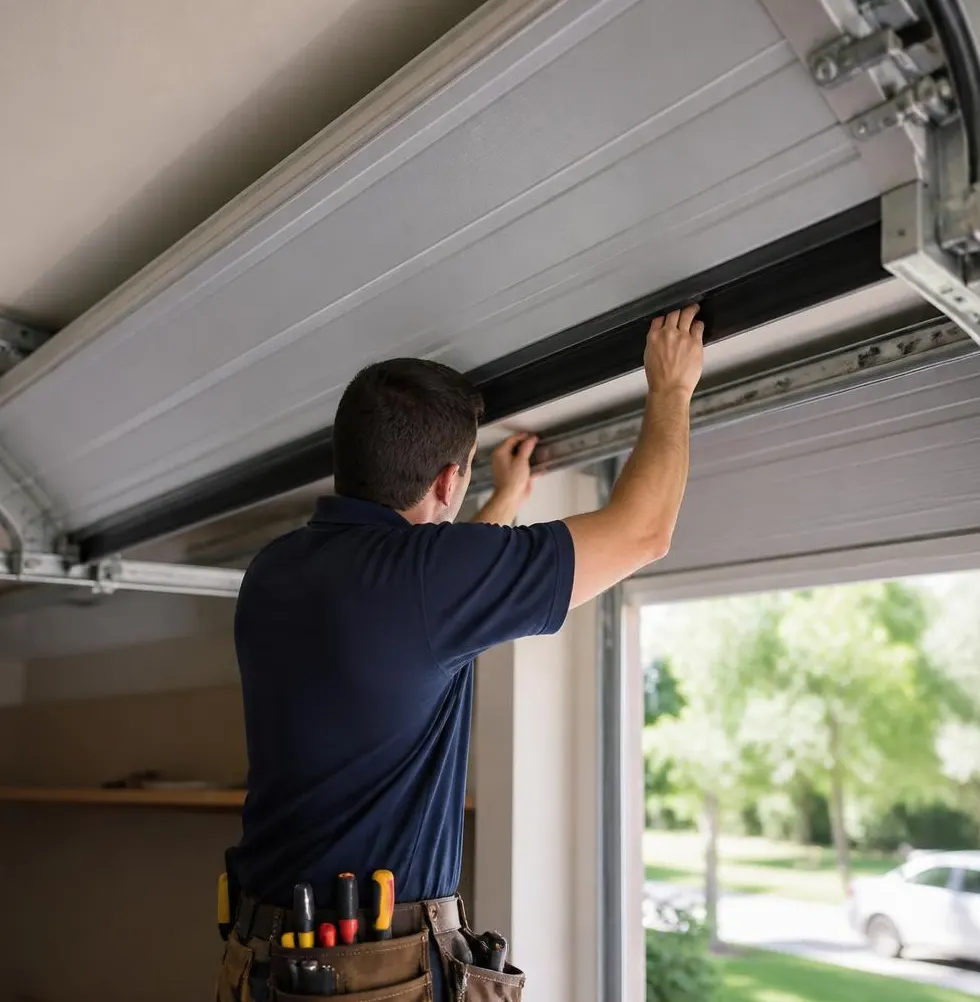
A typical October or November service call here starts the same way: the homeowner says the door was fine all summer, and now it's grinding, sticking halfway, or reversing for no reason. Almost every time, the cause traces back to what the door just went through — months of heat, humidity, and afternoon downpours, with salt air thrown in for anyone near the coast. As that weather pattern breaks and drier air moves in, all that moisture damage finally shows itself. This is the window to catch it before it turns into a bigger repair.
What Hurricane Season Leaves Behind
Garage doors in this part of Florida take a beating between June and November, even in a quiet storm year. Humidity swells wood panels and door seals, salt-laden air accelerates rust on tracks, hinges, and springs, and repeated pressure changes from storms can stress rollers and the opener's travel settings. Once the drier, milder weather settles in, wood and composite parts start to shrink back down, which is exactly when gaps, loose hardware, and misaligned tracks become noticeable. A door that looked fine in August can suddenly feel rough or uneven by December.
Check the Tracks and Rollers First
Run the door up and down manually (with the opener disconnected) and watch the rollers. Rust spots, grinding noises, or a roller that hangs up at the same point every time usually mean corrosion or a bent track section from months of moisture exposure. Wipe down the tracks and look for pitting on the metal, especially if the house is within a few miles of the water. A light coat of silicone-based lubricant on rollers and hinges now — not WD-40, which attracts dust — will carry the door through the cooler months without binding.
Inspect Springs Before They Fail
Springs do the heavy lifting on every garage door, and they're also the part most affected by cycles of humidity and heat stress. Signs of trouble include a door that feels heavier than usual when lifted manually, a visible gap in the spring's coils, or a loud bang from the garage (that's usually a spring letting go). Springs are under high tension and are not a safe DIY repair — this is one job to leave to a technician rather than attempt with hardware-store parts.
Reseal Against Shrinking Weatherstripping
As humidity drops, the rubber seal along the bottom of the door and the weatherstripping around the frame often shrinks or cracks after a summer of swelling and contracting. This is when homeowners start noticing daylight gaps at the corners, drafts, or small pests finding a way in. Replacing worn weatherstripping is inexpensive and straightforward, and it keeps both moisture and insects out through the drier months.
Test the Opener and Safety Sensors
Storm season is hard on garage door openers — power surges, humidity getting into the control board, and sensors that shift out of alignment from vibration or impact. Before relying on the opener daily through the cooler season, check that:
- The door reverses immediately when something blocks the sensor beam
- The remote and keypad both respond without delay
- The opener doesn't strain, stall, or make a new noise partway through the cycle
- The force and limit settings haven't drifted, which can cause the door to close too hard or stop short
If any of these are off, it's often a quick adjustment — but it's worth catching now rather than after the opener fails completely.
Rust Prevention for Coastal Homes
Homes closer to the water deal with salt air corrosion on hardware year-round, but the shift out of hurricane season is a good checkpoint to get ahead of it. Wipe down hinges, tracks, and the bottom edge of the door panel, and touch up any bare metal with a rust-resistant primer before surface rust spreads. Left alone, rust weakens hardware and eventually affects how smoothly the door opens and closes.
When to Call Bradenton Garage Door Works
If the door is sticking, making new noises, sagging on one side, or the opener is acting unpredictably, it's time to call in a technician rather than keep adjusting things manually. Bradenton Garage Door Works handles seasonal garage door maintenance to catch rust, worn rollers, and misaligned tracks before they turn into a stuck or broken door, and we handle spring replacement safely when springs show wear from months of heat and humidity. We also check opener performance and sensor alignment as part of a full inspection, so the door works reliably through the cooler months ahead.
If your garage door has felt off since summer, don't wait for it to get stuck halfway. Call Bradenton Garage Door Works today to schedule a seasonal inspection anywhere in Bradenton, FL and the surrounding area.